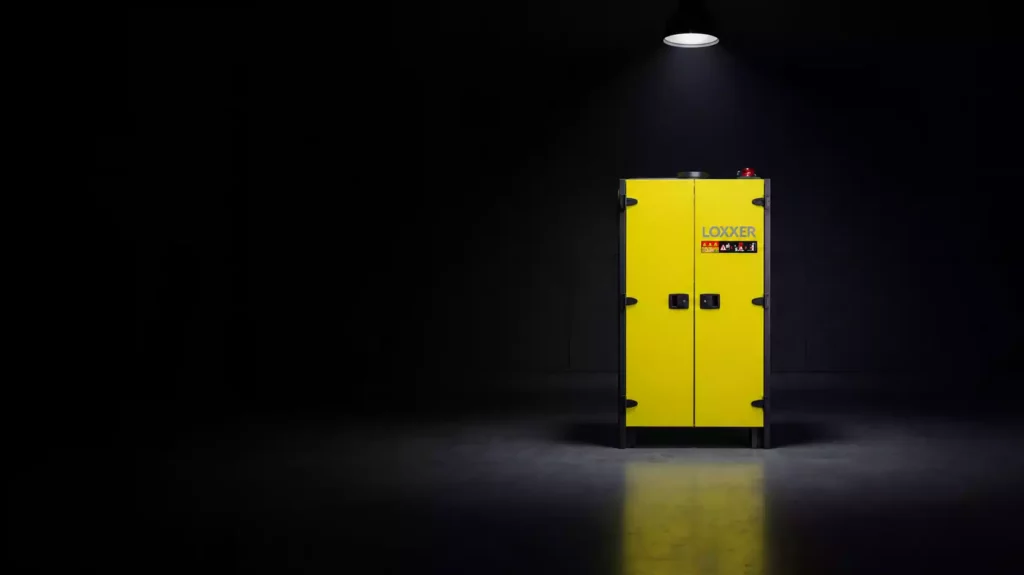
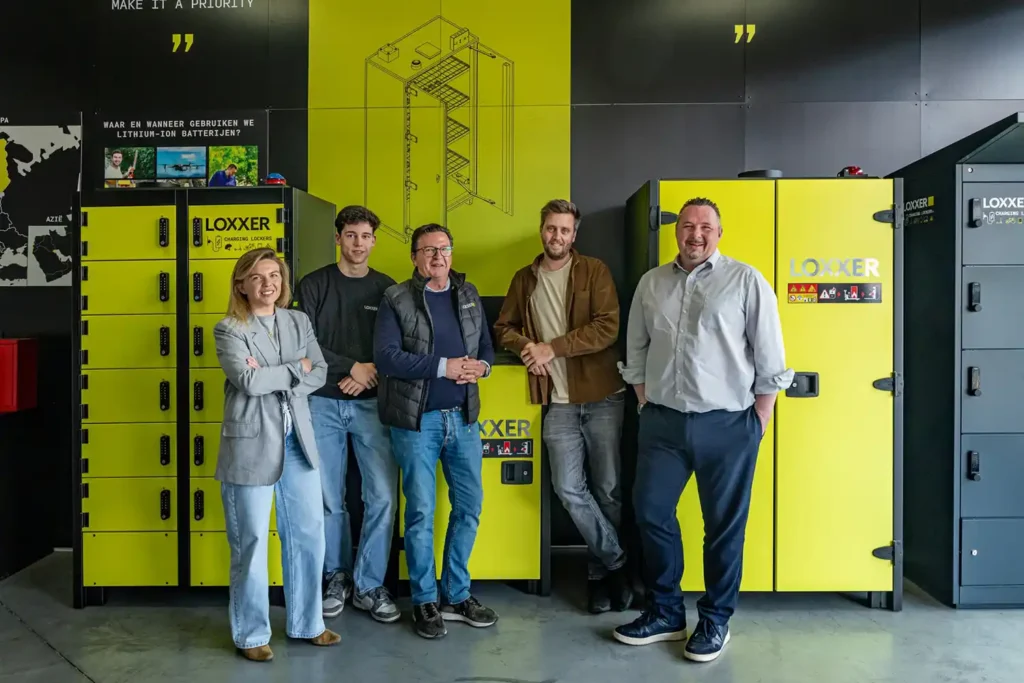
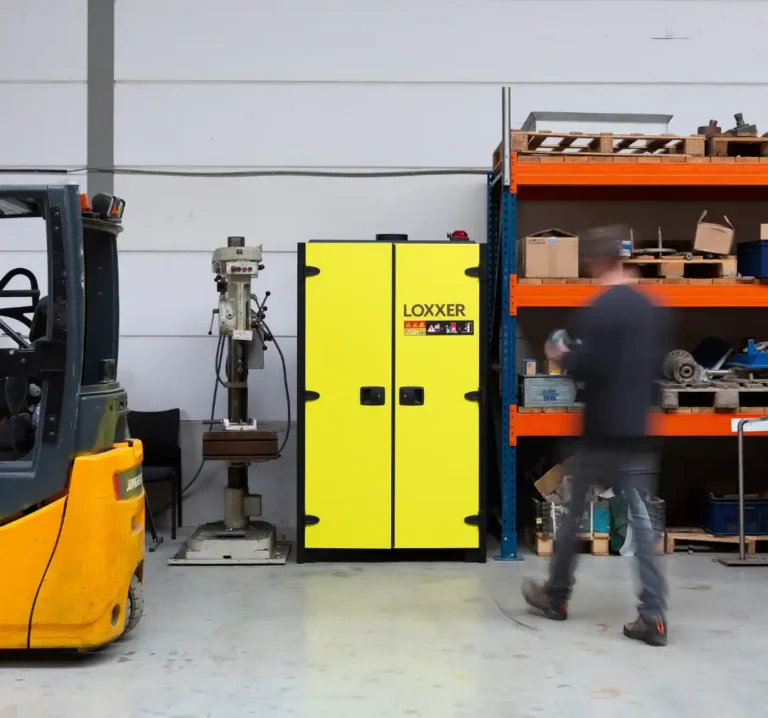
LOXXER develops certified solutions for the safe storage and charging of lithium-ion batteries. From individual e-bikes to complete industrial installations.
A damaged or defective cell can self-ignite without warning. Once started, the process feeds itself and is virtually impossible to stop with conventional extinguishing agents.
The PGS 37-2 guideline and insurance policies are imposing increasingly strict requirements on lithium battery storage. Non-compliance leads to direct liability and high costs.
A battery fire doesn't just shut down the affected building. Machines, stock, and surrounding production resources are caught up in it. The costs always exceed those of prevention.
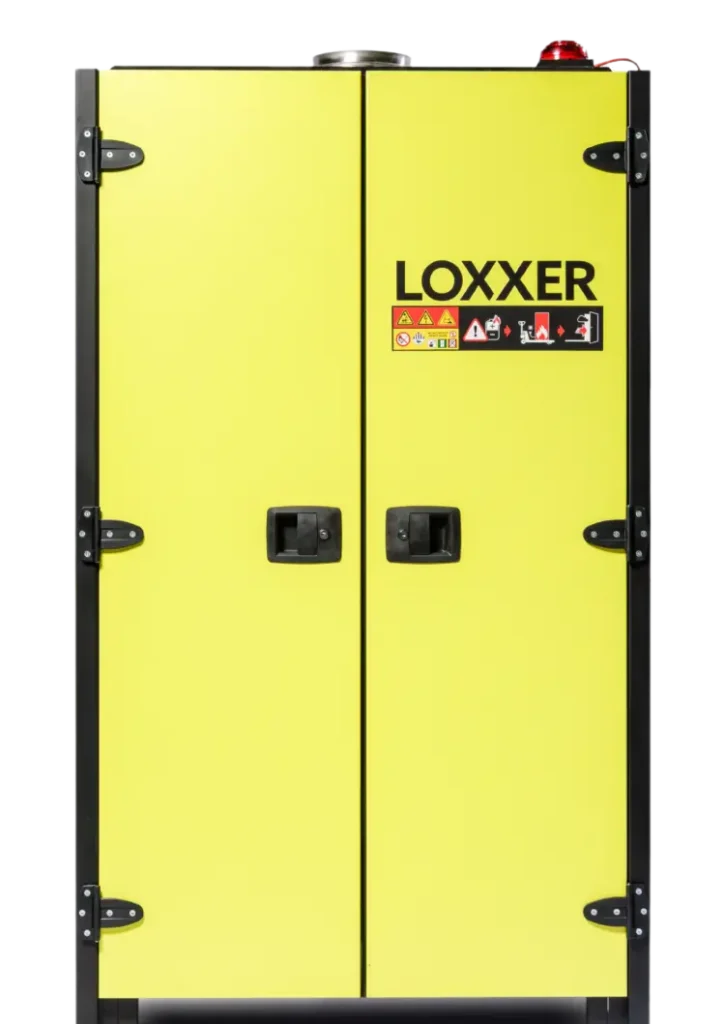
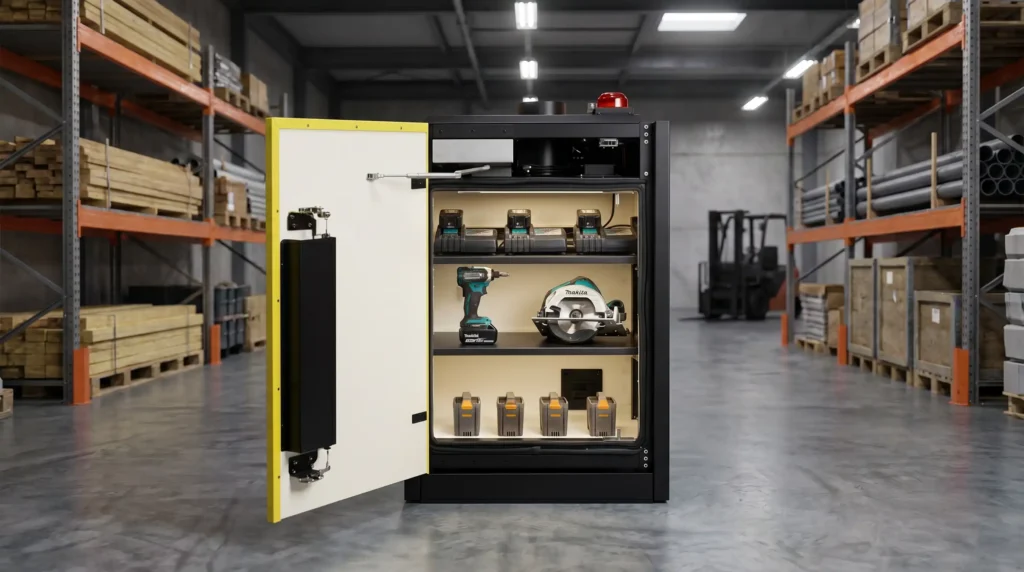
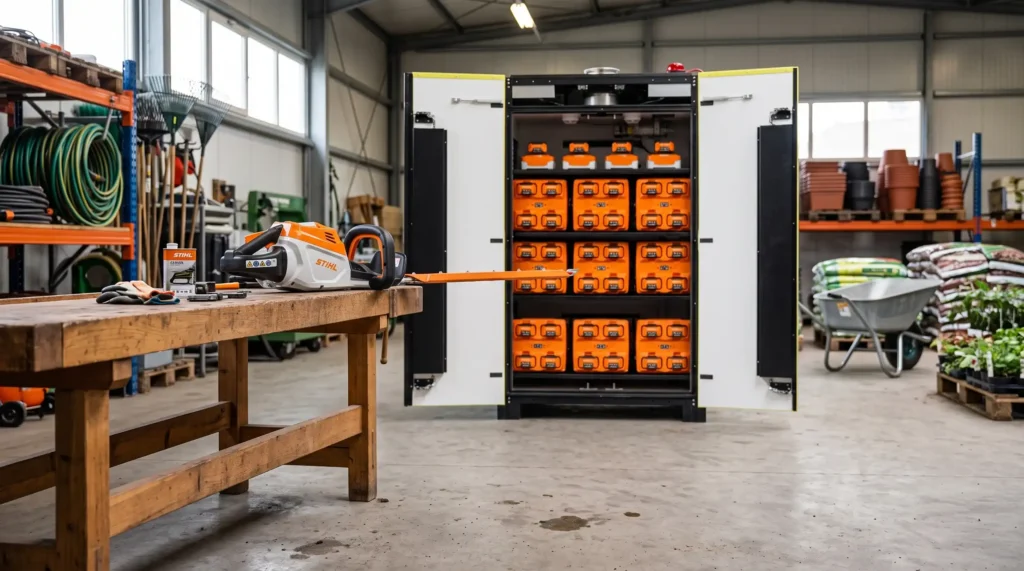
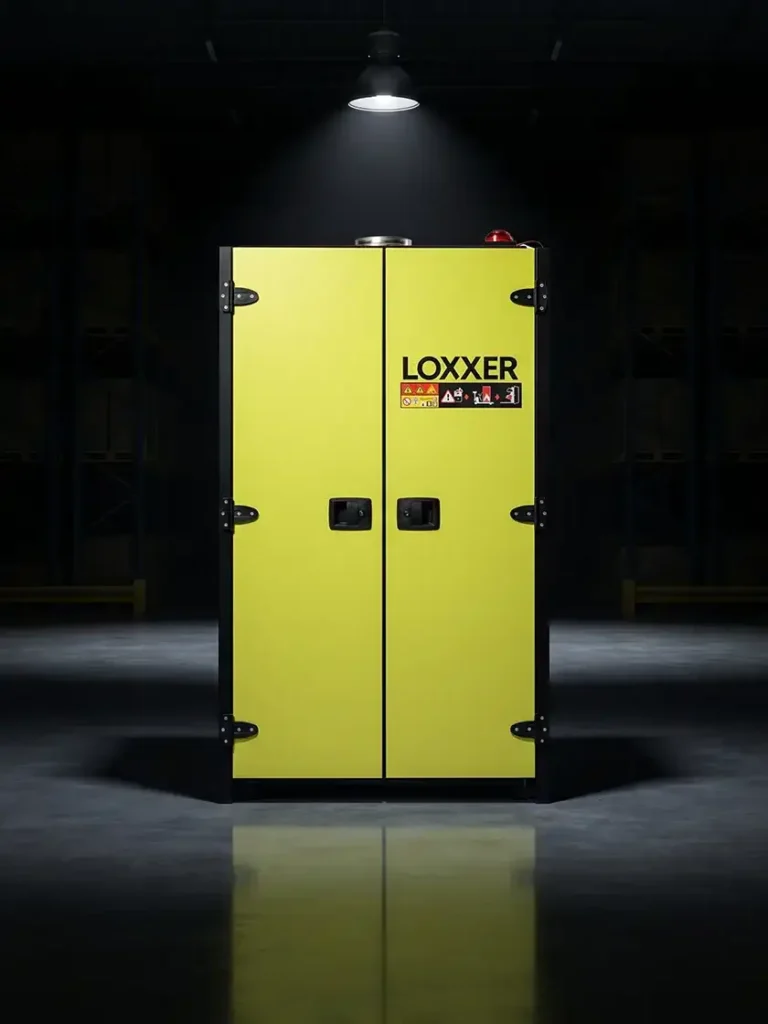
VDMA-certified charging and storage cabinets for batteries from e-bikes, scooters, tools, and industrial equipment.
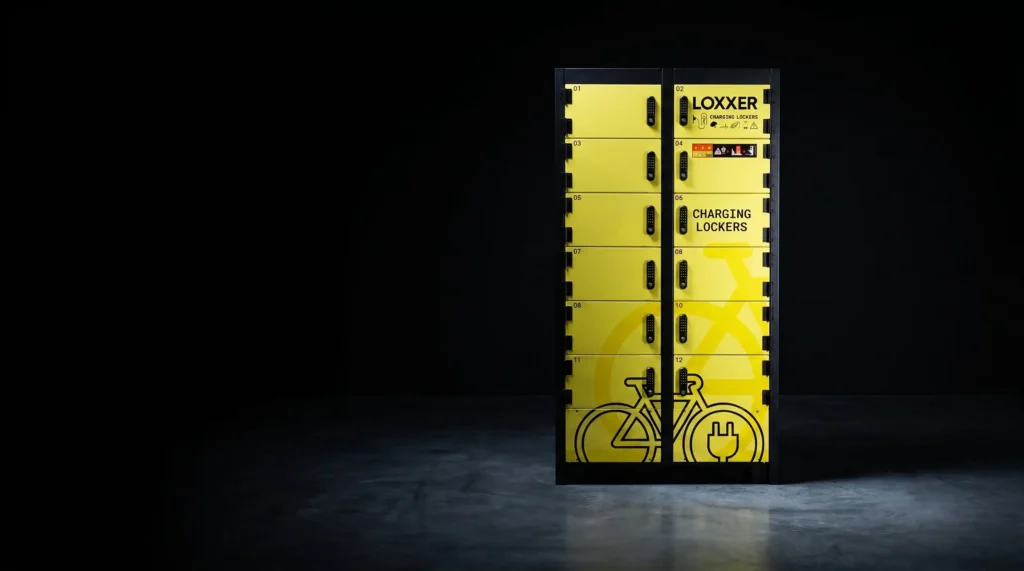
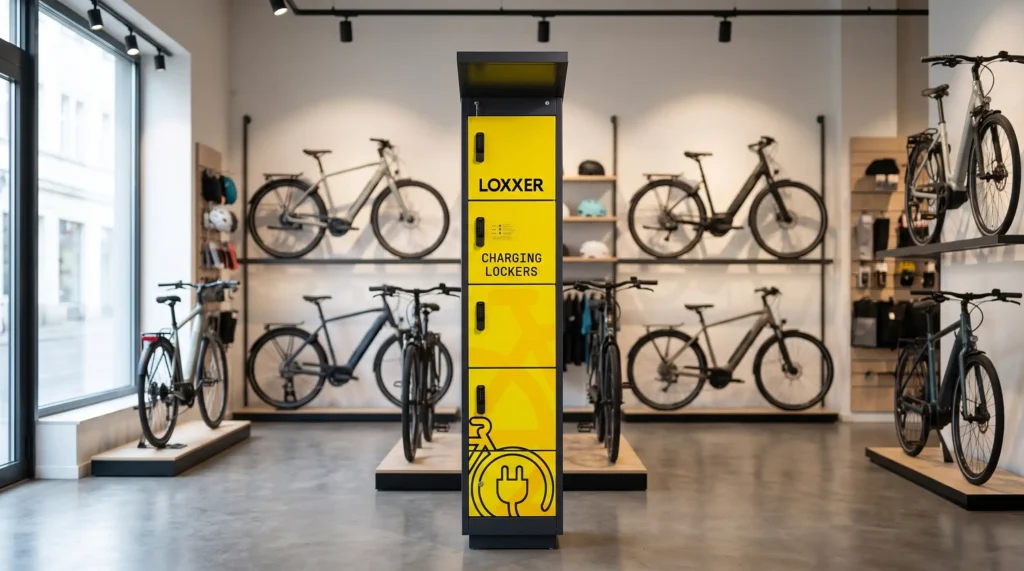
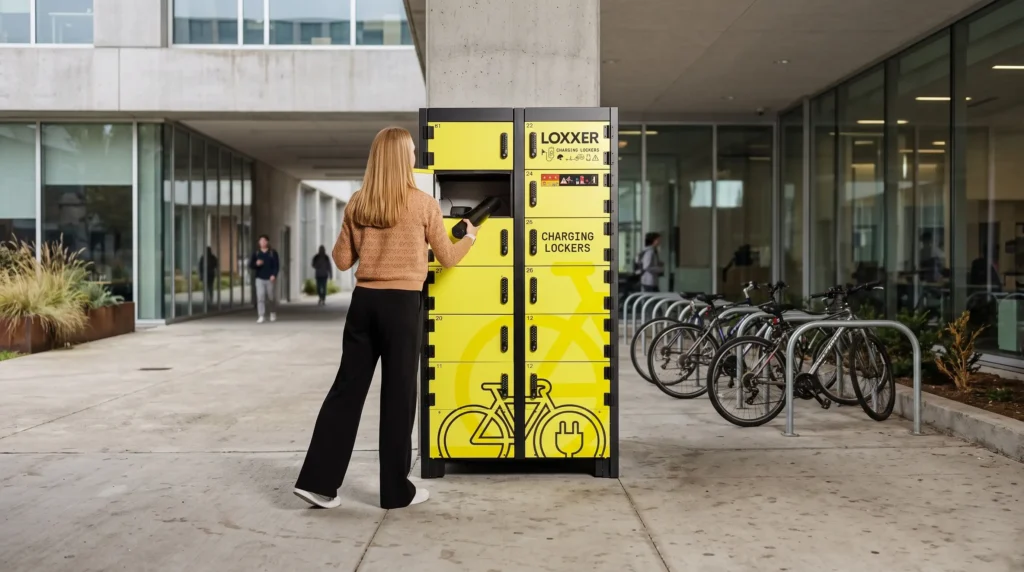
Individual charging lockers for employees, customers, or visitors. Ideal for bike shelters, warehouses, and office environments.
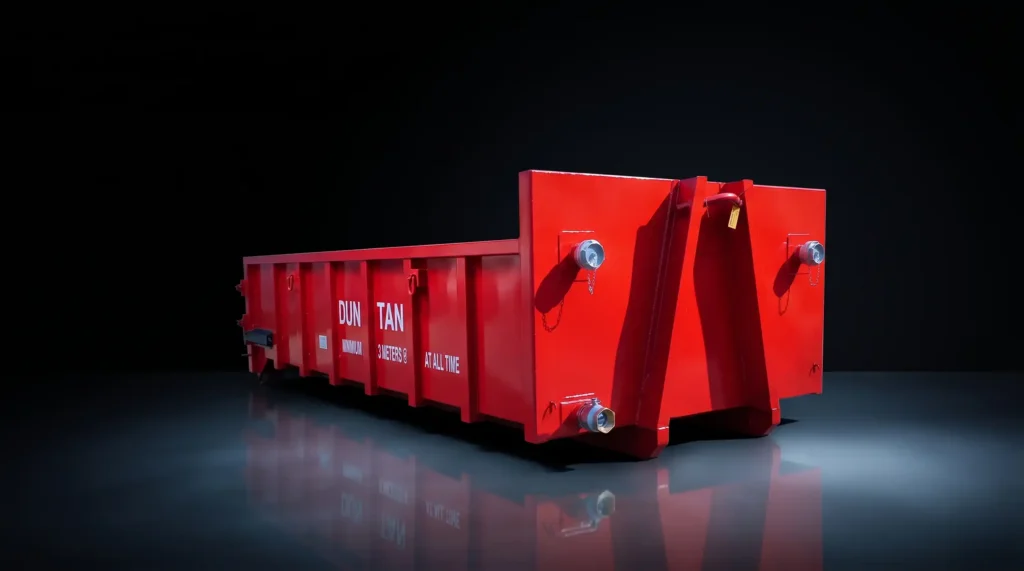
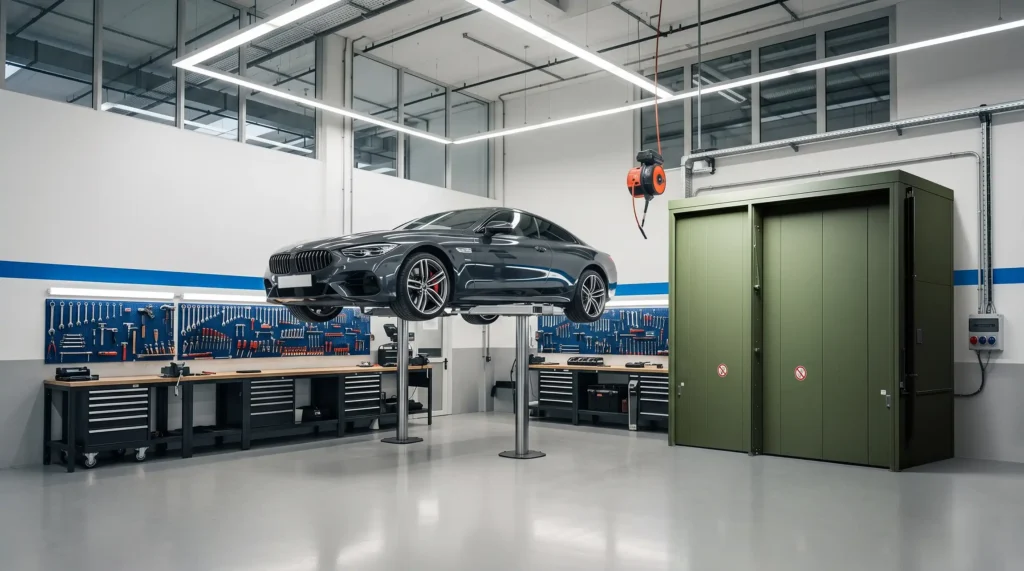
External storage containers for large battery packs, forklifts, and autonomous vehicles.
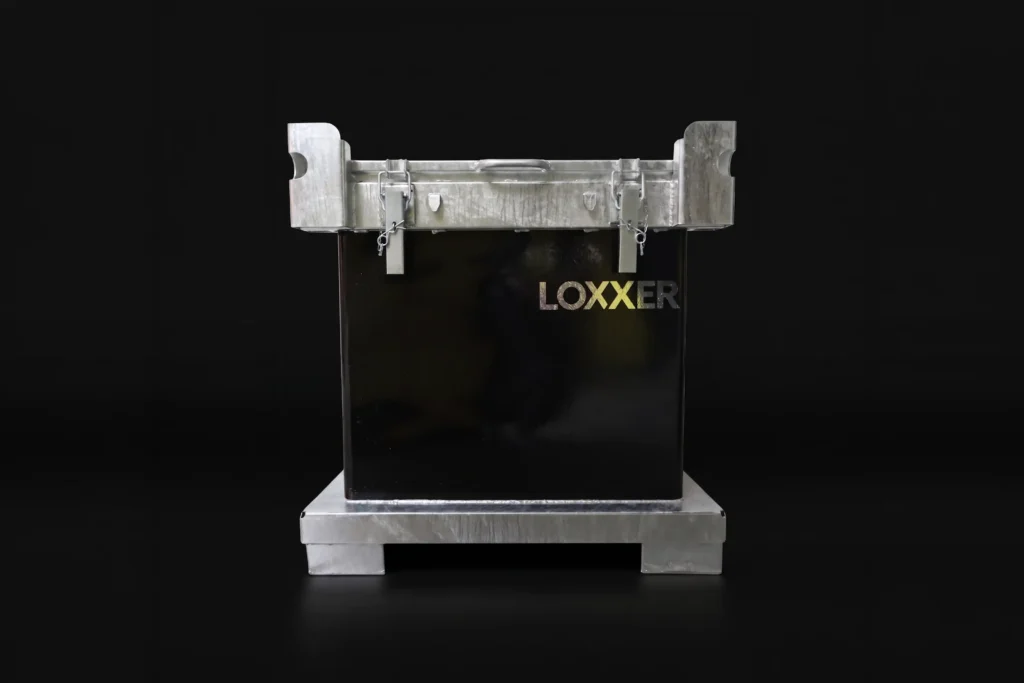
Certified transport solutions and fire blankets for the safe transport of lithium batteries by road.
Portable extinguishing equipment and ASP box for immediate intervention in the event of a lithium battery fire. Safe for users, animals, and the environment.
Not sure which solution fits your situation?
Find my solutionWe guide you through every step: from mapping your risk to the delivery and installation of the right tailored solution.

We map out your situation: which batteries, how many, in what environment, and with which regulatory requirements.
Based on the analysis, we propose the most efficient combination of products. Standard or fully customized.
All LOXXER products are manufactured in our own factory in Roeselare. Full control over quality and lead times.
We handle the complete installation, including documentation for your insurer and a compliance report.
LOXXER is not a distributor of foreign products. We design, manufacture, and supply everything in-house, from Roeselare.
Full control over quality, customization, and lead times. No intermediaries, no compromises.
Our products comply with the strictest European standards and are regularly retested by independent bodies.
From risk analysis to compliance documentation for your insurer. We take care of everything, from quote to completion.
Own offices in Belgium, the Netherlands, the United Kingdom, and Poland, complemented by preferred partners throughout Europe.
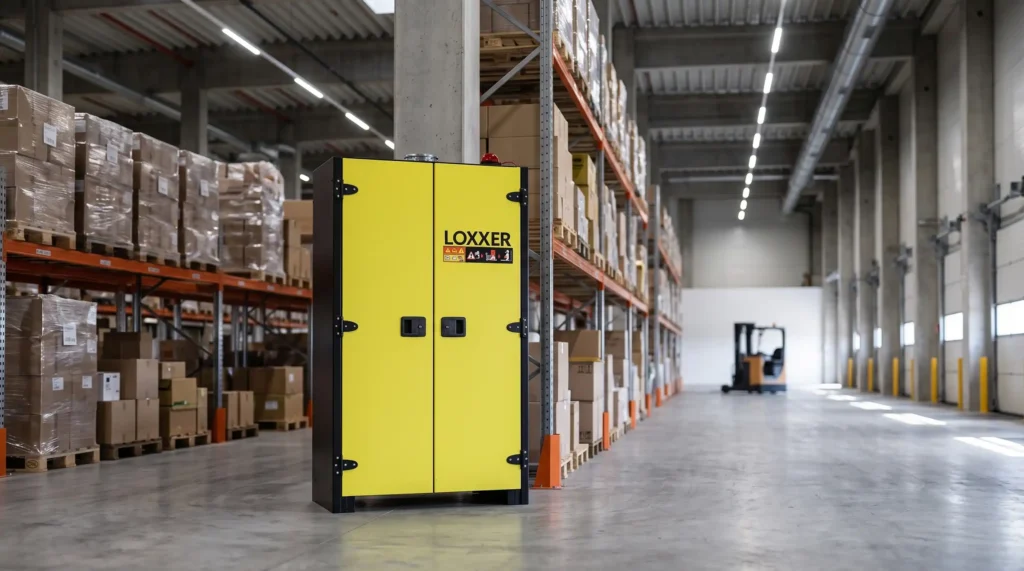
The LOXK2000 is the most certified charging and storage cabinet on the market. Designed for maximum protection of your batteries, your people, and your environment.
We purchased a fire-resistant cabinet for battery storage, equipped with a self-extinguishing system. The cabinet is very solidly built and immediately conveys quality. Everything feels sturdy, safe and professional. The finish is also excellent. Honestly: at this price, you can't build a cabinet like this yourself. The price-quality ratio is therefore particularly good. We are very satisfied with our purchase and would definitely recommend this cabinet to companies wanting to store batteries safely and responsibly.
Top service! Top material
In addition to our own offices in Belgium, the Netherlands, the United Kingdom, and Poland, we work with a network of certified preferred partners throughout Europe.
Siemensstraße 32
71394 Kernen im Remstal – Rommelshausen
Binnensteenweg 160
2530 Boechout
Rue de la Signeauderie 154
ZA La Daunière – St Georges de Montaigu
85600 MONTAIGU VENDEE
Compared to traditional lead-acid batteries or nickel-cadmium batteries, lithium-ion batteries perform better on almost all technical parameters. They have a higher energy density, a longer life in cycles, a lower self-discharge rate, and better charging efficiency. Furthermore, they require little maintenance and have no memory effect. This combination of factors makes them commercially attractive for sectors such as logistics, construction, automotive, and green maintenance, where batteries are used intensively and repeatedly. The higher purchase price is usually more than compensated for by lower operating costs over the lifespan.
Within the category of lithium-ion, there are various chemical compositions, each with its own risk profile. The most common are NMC (nickel-manganese-cobalt), LFP (lithium iron phosphate), NCA (nickel-cobalt-aluminum), and LCO (lithium cobalt oxide). LFP batteries are considered the most stable variant with the lowest risk of thermal runaway, and are popular in e-bikes and industrial applications. NMC and NCA offer higher energy density but are more sensitive to damage and incorrect charging conditions. For operators of larger battery parks, knowing the battery type is a first step towards a proper risk assessment.
Thermal runaway is a self-reinforcing process in which a lithium-ion cell is compromised due to internal short-circuiting, mechanical damage, improper charging, or external heat. The cell begins to produce temperature, which accelerates the internal chemical reactions, in turn generating even more heat. This process escalates extremely quickly and can lead to intense smoke development, the release of toxic gases, and fires that are difficult to extinguish with conventional means within seconds. In a battery pack or charging cabinet without adequate compartmentalization, thermal runaway can also propagate from cell to cell, known as cell-to-cell propagation. Controlling and containing this risk is the core of what certified LOXXER cabinets do.
Safe charging starts with using a certified charger that is specifically approved for the battery type in question. Never charge at extreme temperatures: the ideal charging temperature is between 10 and 30 degrees Celsius. Do not leave batteries charging unattended in places without fire safety infrastructure, such as a wooden shed or a busy workshop. When charging on a large scale, always use a certified charging and storage cabinet that can manage thermal expansion, smoke development, and any fire. Inspections before charging are not a formality: a damaged or swollen battery should never be connected to a charger.
A lithium-ion battery is a rechargeable battery in which lithium ions move back and forth between a positive electrode (cathode) and a negative electrode (anode) during charging and discharging. This principle makes lithium-ion batteries extremely energy-dense: they store a lot of energy in a compact and lightweight format. This makes them the dominant choice for electric vehicles, tools, e-bikes, and industrial applications. The downside of that high energy density is that the battery can react dangerously if damaged, misused, or overheated, which requires a thoughtful solution for storage and charging.
A smoke detector detects the presence of smoke particles in the air as an early signal of fire or smoldering. The most common types are ionization detectors, which use radioactive radiation to measure changes in air composition, and optical detectors (also known as photoelectric detectors), which send a beam of light and respond to smoke particles that scatter that light. In lithium fire safety, optical detectors are generally preferred because they are more sensitive to the smoldering, slow fire characteristic of battery incidents at an early stage. In the context of a LOXXER storage cabinet or container, an integrated smoke detector is part of the multilayer security strategy: early detection provides time to act before a situation escalates.
In Belgium and the Netherlands, the relevant guidelines refer to PGS 37-2 (storage guideline for lithium-ion batteries in a business context) and the VDMA 24994 standard for charging and storage cabinets. These standards stipulate that batteries must be stored in fire-resistant, ventilated environments with sufficient distance from other flammable materials. For large-scale storage, a fire alarm system is mandatory, and staff must have an up-to-date emergency plan. Cabinets and containers that comply with VDMA 24994 are specifically validated for managing fire and preventing spread in the event of a battery incident. It is strongly recommended to have the specific situation assessed by a specialist beforehand: the damage from a fire always far exceeds the investment in correct infrastructure.
Request a no-obligation quote or call us directly. Our experts respond within 24 hours.